

A Region on Edge: What Really Happened Between Iran, Israel and the U.S. – An In-Depth Overview
On Saturday, February 28, 2026, the Middle East witnessed one of its most serious escalations in recent years — a significant military confrontation involving Iran, Israel, and the United States that has shaken the region and challenged fragile diplomacy efforts. This is what we know so far — unpacked clearly, humanely, and tied to verified reporting.
Iran Israel US Escalation 2026
Background: Diplomacy Under Pressure
In early 2026, behind closed doors, the U.S. and Iran were engaged in high-stakes negotiations aimed at curbing Tehran’s nuclear ambitions and building a framework for verifiable limits. These talks came after years of tension over Iran’s nuclear program, ballistic missiles, and regional influence in places like Lebanon, Gaza, Iraq, and Yemen. Despite months of back-and-forth negotiations — including moderated offers and mediated outreach — no breakthrough was reached. (The Guardian)
Israel, meanwhile, expressed deep skepticism whether Iran could be trusted to abide by any agreement or abandon its missile and weapons development programs — publicly stating that diplomatic talks alone were not enough to neutralize what it considers an existential threat.
Iran Israel US Escalation 2026 has become one of the most serious geopolitical crises of the year, following Saturday’s military confrontation between Tehran, Washington, and Tel Aviv.
Iran Israel US Escalation 2026: What Happened on Saturday?
The Explosion That Sparked It All: Saturday’s Attack
On the morning of Saturday, February 28, 2026, multiple coordinated airstrikes struck Iran. The operations were carried out jointly by Israeli forces and the United States, with Israel characterizing the action as a pre-emptive strike aimed at preventing imminent threats posed by Iran’s nuclear and missile systems. (Reuters)
What We Know Happened
📌 Explosions were reported in Tehran, including near government and strategic sites. Sirens blared across the Iranian capital as streets were closed and public panic spread.
📌 The Israeli defense establishment described the operation as a coordinated and deliberate action planned over months, justifying it as necessary to disrupt Iranian capabilities and blunt threats. )
📌 The United States, under President Donald Trump’s leadership, declared the start of “major combat operations”, explicitly aiming to weaken Iranian military strength and its nuclear infrastructure.
Casualties and Devastation: The Human Toll
The ongoing conflict has already inflicted significant destruction and loss of life:
In Iran
- Explosions and military strikes hit multiple cities, including Tehran, causing damage to strategic and civilian infrastructure.
- Reports indicate a girls’ school was destroyed, tragically killing dozens of children — at least 80 children were reported killed in one strike, with many more wounded.
Regional Impact
- Some Iranian missiles and drones hit targets beyond Iran, including areas inside the United Arab Emirates, where civilian casualties occurred.
Iran Israel US Escalation 2026: What Triggered the Saturday Strike?
These figures — especially involving children — have sparked global concern and outrage, with calls for restraint from several U.N. member states. 🕯️🙏
Iran’s Retaliation: A Broader Response
In the afternoon and evening of Saturday, Iran launched a series of retaliatory strikes:
📍 Iran’s Revolutionary Guard acknowledged firing missiles and drones at U.S. bases and Israeli targets across the Middle East, including facilities in Bahrain, Kuwait, Qatar, UAE, Saudi Arabia, Iraq, and Jordan. (The Guardian)
📍 Ballistic missiles reportedly struck the U.S. naval base in Bahrain and were intercepted over some Gulf states. (Reddit)
📍 Some missile launches caused damage and even deaths in cities like Abu Dhabi, according to regional sources. (Al Jazeera)
Iran’s leadership framed its response as a legitimate act of self-defense — asserting that strikes on its own territory, leadership, and infrastructure justified a full counterattack. Tehran also accused neighboring governments of allowing U.S. operations from their territories, and thus complicit in the assault. (The Guardian)
Why Diplomacy Failed — and Why Iran Says It Must Have Arms
Diplomatic Breakdown
Throughout early 2026, negotiations between Tehran and Washington were fragile and uneven. Differences centered on:
- The degree of nuclear constraints vs. missile development limits; Iran was willing to discuss limits on nuclear enrichment but rejected linking fixes to its wider missile capabilities. (Reuters)
- Israel and the U.S. demanded verifiable restrictions that Iran saw as a threat to its sovereignty.
- Iran’s distrust of Western intentions — believing pressure was aimed at regime change instead of mutual security guarantees — further eroded talks. (AP News)
The escalation also carried symbolic weight. Reports indicated heightened tensions extending toward areas hosting significant foreign military infrastructure, including bases associated with the United Kingdom in the eastern Mediterranean. While not all strikes resulted in confirmed large-scale destruction, the psychological impact was unmistakable: the conflict was no longer contained. What may have initially been calculated as a limited strike operation evolved into a broader regional confrontation narrative. The human dimension of this shift — fear, uncertainty, and the risk of miscalculation — now looms larger than any single battlefield development.
Why Iran Argues It Needs Weapons
From Tehran’s perspective, weapon systems are more than tools of aggression — they are a deterrent:
🔹 Iran points to decades of hostility, sanctions, sabotage of nuclear facilities, and repeated airstrikes as evidence that diplomatic assurances alone are weak.
🔹 Iranian officials stress that a credible defense capacity including missiles and counter-strike abilities is the only way to protect national interests and territorial integrity in a hostile neighborhood.
🔹 Global power dynamics — including the U.S. military’s presence in the Gulf and allied actions — reinforce Iran’s belief that self-sufficiency in defense is necessary. (read more details)
This logic, however, is not universally accepted and remains deeply controversial across regional and global actors.
Global Reactions and Escalation Risks
The strike has triggered wide geopolitical responses:
Iran Israel US Escalation 2026 intensifies as Trump orders strikes on Iran and Tehran retaliates, escalating fears of wider Middle East war.
Russia condemned the U.S.–Israeli strikes as “unprovoked aggression” and called for an immediate halt to violence, warning the conflict could become a humanitarian disaster.
Several Gulf states hosting U.S. assets criticized Iran’s retaliation as a violation of their sovereignty.
International bodies, including proponents of diplomacy, are pushing for emergency sessions of the U.N. Security Council to address the crisis.
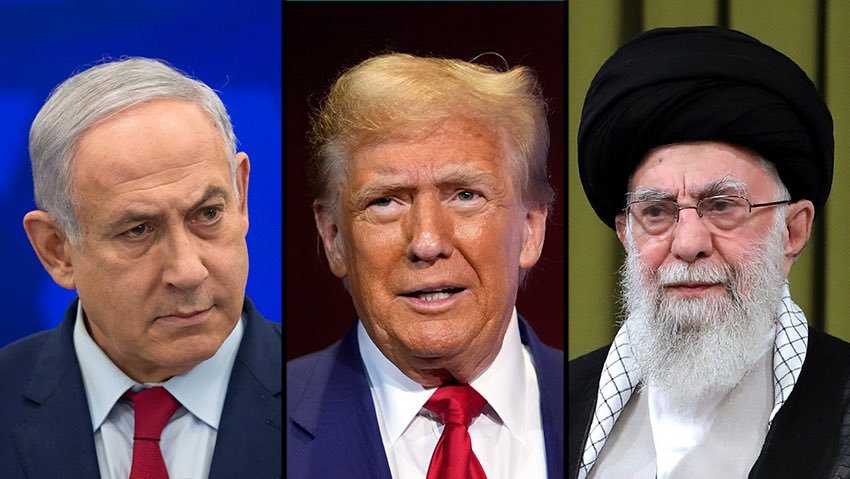
What This Means for the Future
The most urgent questions now facing the world are:
- How far will the conflict spread?
- Can international diplomacy still avert full-scale war?
- What protections exist for civilians caught in the crossfire?
What began as stalling negotiations over Iran’s nuclear program has now expanded into a broader armed confrontation involving multiple states, proxy interests, and civilian populations.
In the coming days, regional stability, global economics, and humanitarian outcomes will be directly affected by decisions made in capitals from Washington to Tehran to Riyadh and beyond.
Iran Israel US Escalation 2026 has become one of the most serious geopolitical crises of the year, following Saturday’s military confrontation between Tehran, Washington, and Tel Aviv.
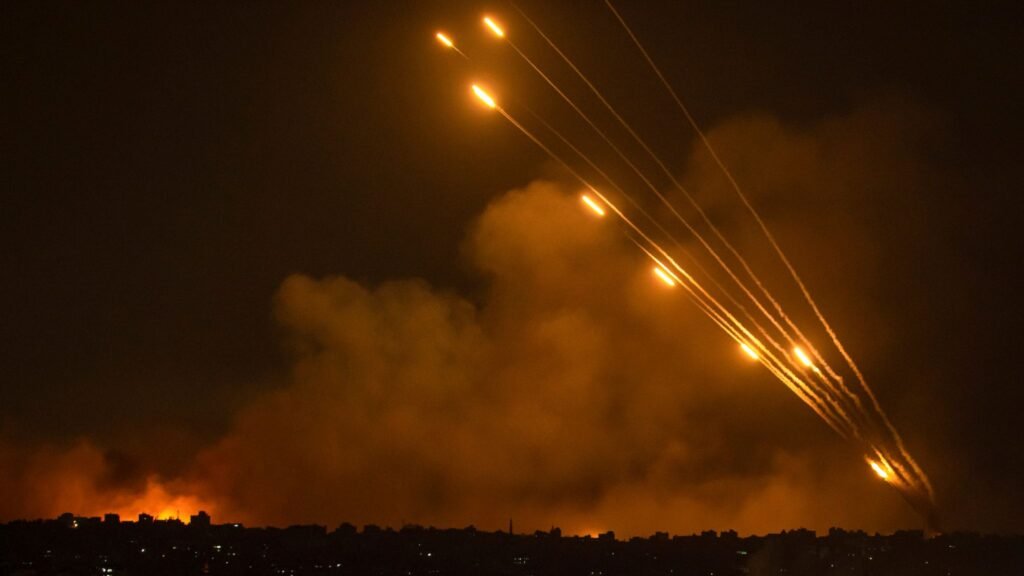
Iran Israel US Escalation 2026 intensifies as Trump orders strikes on Iran and Tehran retaliates, escalating fears of wider Middle East war.
The strategic objective behind the strikes, according to multiple regional analysts, appeared to go beyond simple deterrence. There were widespread discussions that senior Iranian leadership circles were among the intended pressure points of the operation. While no confirmed reports indicated the death of Iran’s Supreme Leader, speculation intensified that weakening the upper command structure could trigger internal instability. However, rather than creating fragmentation, the aftermath seemed to consolidate power among emerging hardline figures within Iran’s political and military establishment. Instead of producing moderation, the escalation arguably strengthened more uncompromising voices — reshaping the internal balance in ways external planners may not have anticipated.
What followed marked a shift in battlefield tactics. Iranian forces increasingly relied on advanced drone technology and compact missile platforms, including loitering munitions capable of precision self-detonation. These systems, lighter and more adaptable than traditional ballistic assets, allowed Iran to expand operational reach while reducing conventional exposure. Over successive days, retaliatory strikes reportedly targeted strategic military positions across the broader Middle East region. Analysts observed heightened activity around key installations, including those linked to Western and allied forces stationed throughout the Gulf and eastern Mediterranean corridors.
Conclusion
Saturday’s escalation is not just a military clash — it’s a dramatic illustration of how fragile diplomacy can be when trust erodes and stakes rise. It is also a stark reminder of the human costs of geopolitical conflict, especially on innocent families and children.
Whether this moment becomes a stepping stone to serious peace efforts or a prolonged cycle of retaliation will depend on urgent international engagement and the willingness of leaders to prioritize negotiation over conflict.
iran-israel-us-escalation-2026
Iran Israel US Escalation 2026 regional military tensions map