

The Ripple Effect: Navigating Global Market Volatility Amidst Middle East Tensions
Introduction
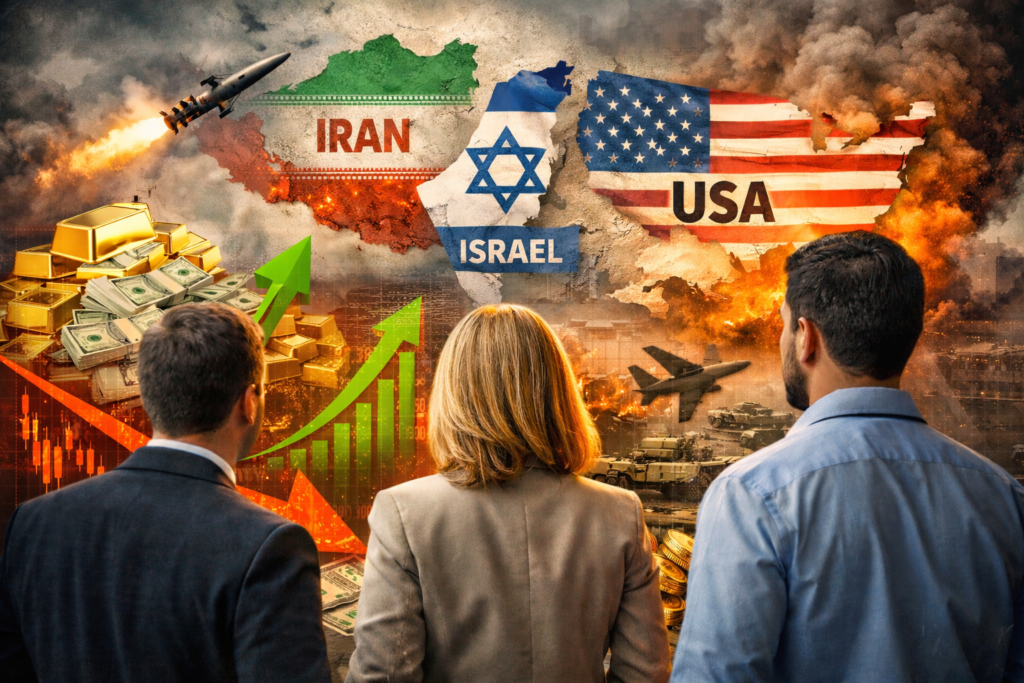
The global financial system is currently experiencing elevated volatility driven by escalating geopolitical tensions involving Iran, Israel, and the United States. These developments are not confined to regional instability; rather, they are transmitting systemic shocks across global markets through energy prices, trade routes, inflation expectations, and investor sentiment.
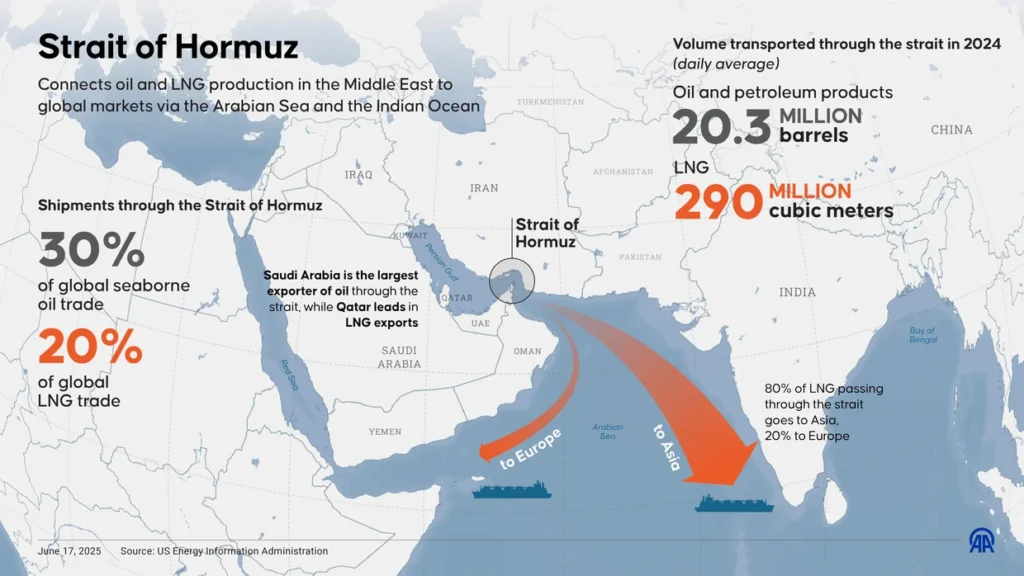
Key maritime chokepoints such as the Strait of Hormuz and the Red Sea shipping lanes remain central to global energy and trade flows. Any perceived disruption to these routes introduces significant supply-side risk into the global macroeconomic environment.
For investors, this environment presents a dual reality:
- Elevated short-term risk and uncertainty
- Potential long-term value opportunities in oversold assets
Middle East market volatility is currently reshaping the global financial system as geopolitical tensions between Iran, Israel, and the United States continue to escalate. This Middle East market volatility is driving sharp movements in oil prices, gold demand, and global investment strategies.
https://globalviralhub.com/middle-east-market-volatility-investing-2026
1. Geopolitical Catalyst: Why Markets Are Reacting
Markets are fundamentally driven by uncertainty, and the current geopolitical configuration introduces a multi-layered risk structure:
1.1 Maritime and Energy Risk
The Strait of Hormuz is responsible for approximately 20% of global oil transportation. Any threat to its stability introduces an immediate geopolitical risk premium into global energy prices.
1.2 Inflation Transmission Mechanism
Rising oil prices create a cascading inflation effect:
- Higher transportation costs
- Increased production expenses
- Elevated consumer goods pricing
This forces central banks to maintain restrictive monetary policy for longer periods, limiting liquidity expansion in financial markets.
1.3 Risk-Off Capital Rotation
In such environments, capital typically rotates into:
- Gold and precious metals
- US dollar liquidity
- Government bonds
While exiting:
- Growth equities
- Emerging markets
- High-risk speculative assets
The Middle East market volatility is currently reshaping global financial systems as geopolitical tensions between Iran, Israel, and the United States escalate…”
Middle East market volatility is currently reshaping the global financial system as geopolitical tensions between Iran, Israel, and the United States continue to escalate. This Middle East market volatility is driving sharp movements in oil prices, gold demand, and global investment strategies.
2. Systemic Risk and Market Mispricing Opportunities
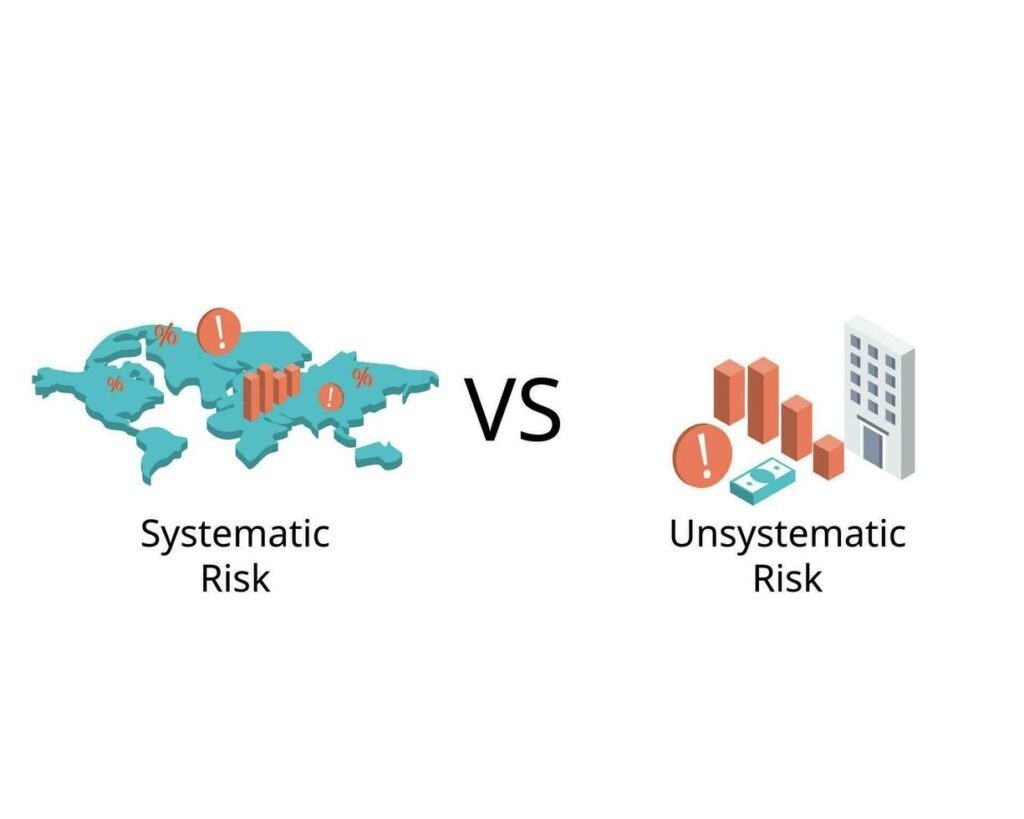
During geopolitical shocks, markets often overreact, creating a divergence between intrinsic value and market price. This phenomenon is known as systemic risk-induced mispricing.
Key Opportunity Zones:
2.1 Energy Sector (Natural Hedge)
Energy companies often benefit from rising oil prices. However, the focus should be on:
- Integrated oil majors
- Midstream pipeline operators (less exposed to shipping disruptions)
- Companies with strong dividend coverage and balance sheets
2.2 Defense and Aerospace Sector
Geopolitical instability tends to increase global defense expenditure.
Investors typically revalue:
- Defense contractors with long-term government contracts
- Aerospace firms with technological moats
- Cybersecurity and intelligence-linked companies
2.3 Large-Cap Technology Companies
High-quality technology firms with strong cash reserves often experience temporary sell-offs due to broad market panic.
However, structurally they benefit from:
- Share buyback capacity
- Acquisition of distressed competitors
- Long-term demand resilience
The Middle East market volatility is currently reshaping global financial systems as geopolitical tensions between Iran, Israel, and the United States escalate…”
3. Market Behavior and Liquidity Dynamics
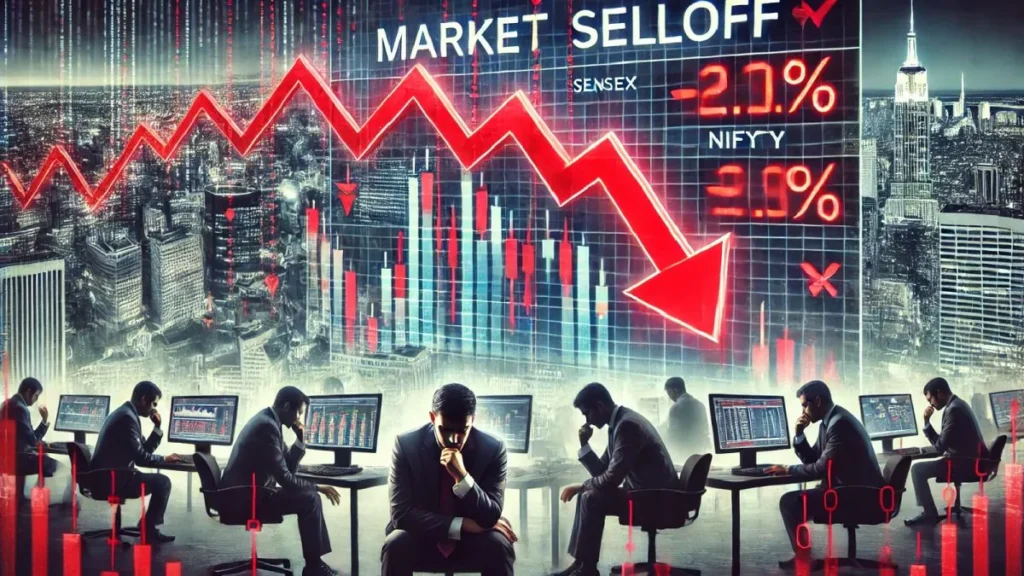
While geopolitics triggers volatility, liquidity conditions determine severity and duration of market downturns.
Key Macro Driver: Liquidity
Market outcomes depend heavily on:
- Central bank policy stance
- Interest rate trajectory
- Credit availability in banking systems
A liquidity-rich environment produces short-lived corrections, while liquidity-constrained conditions amplify downturns into extended bear cycles.
4. Oil Shock Macro Paradox
Oil price spikes create a dual economic burden:
- Inflation acceleration
- Monetary policy tightening delays
This results in a “policy trap” where central banks are unable to ease conditions despite slowing economic growth.
Consequently, markets may decline not only due to fear but due to structurally higher interest rates persisting for longer.
The Middle East market volatility is currently reshaping global financial systems as geopolitical tensions between Iran, Israel, and the United States escalate…”
5. Behavioral Finance: Why Investors Lose in Crisis Cycles
Market participants are often driven by emotional biases during crises:
A. Narrative Overreaction
Investors extrapolate worst-case geopolitical scenarios into full systemic collapse expectations.
B. Volatility Misinterpretation
High volatility is often mistaken for directional certainty rather than uncertainty expansion.
C. Emotional Positioning
Poor timing decisions emerge from fear-driven exits and greed-driven re-entries.
The primary failure is not analytical — it is psychological.
6. Market Crisis Cycle Framework
Geopolitical shocks generally follow a predictable cycle:
Phase 1: Shock & Panic
- Sharp sell-off across all asset classes
- Liquidity contraction
- Correlation across markets approaches 1
Phase 2: Repricing
- Markets begin differentiating asset quality
- Energy stabilizes with risk premium
- Institutional repositioning occurs
Phase 3: Normalization
- Fundamentals reassert dominance
- Capital rotates back into growth assets
- Volatility gradually declines
Most retail investors lose by exiting in Phase 1 and re-entering late in Phase 3.
Middle East market volatility
The Middle East market volatility is currently reshaping global financial systems as geopolitical tensions between Iran, Israel, and the United States escalate…”
7. Logistics, Commodities, and Secondary Effects
A. Shipping and Maritime Disruption
Disruptions in global trade routes create:
- Container shipping shortages
- Rising freight rates
- Temporary supply bottlenecks
This benefits certain maritime logistics operators while harming import-heavy retail sectors.
B. Commodity Inflation
Geopolitical instability tends to increase prices of:
- Oil and gas
- Wheat and agricultural inputs
- Fertilizers
Commodity-linked ETFs often serve as partial portfolio hedges.
8. Risk Management Framework (Expanded & Practical Guide)
In high-volatility geopolitical environments, markets become unpredictable, fast-moving, and emotionally charged. Prices can swing sharply within hours based on headlines rather than fundamentals.
Because of this, the real edge is not prediction — it is risk control and capital survival. A strong investor does not aim to avoid losses entirely, but to ensure that no single event can significantly damage their portfolio.
Middle East market volatility is currently reshaping the global financial system as geopolitical tensions between Iran, Israel, and the United States continue to escalate. This Middle East market volatility is driving sharp movements in oil prices, gold demand, and global investment strategies.
Capital Preservation (The First Rule of Investing) 🛡️
Capital preservation means protecting your investment base before trying to grow it.
In crisis markets:
- Volatility increases rapidly
- Liquidity can disappear suddenly
- Assets can drop 10–30% in short periods without warning
Key Principles:
- Never invest money you cannot afford to keep locked for a period of time
- Avoid emotional “all-in” decisions during news-driven panic
- Keep a portion of your portfolio in cash or low-risk instruments
Why this matters:
If you lose 50%, you need 100% gain just to recover.
That asymmetry is why survival always comes before profit.
Position Sizing (Controlling Exposure per Trade)
Position sizing determines how much capital you allocate to each investment or trade.
In volatile geopolitical conditions, even good ideas can temporarily go against you.
Professional Approach: Staged Entry (Scaling In)
Instead of investing all capital at once:
- Step 1: Enter with 20–30% of planned position
- Step 2: Add if price drops or stabilizes
- Step 3: Fully build position only after confirmation of trend or value zone
Why this works:
- Reduces timing risk
- Lowers average entry price
- Prevents emotional overcommitment
Core Rule:
No single trade should be able to significantly damage your overall portfolio.
Diversification (Spreading Systemic Risk)
Diversification is not about owning many assets — it is about owning different risk drivers.
In geopolitical markets, correlation increases, meaning many assets fall together. Proper diversification reduces this impact.
Balanced Portfolio Structure:
Defensive Sectors (Stability Anchors)
- Energy (oil & gas majors)
- Utilities (electricity, water infrastructure)
- Consumer staples (food, essential goods)
👉 These sectors tend to remain stable even during recessions.
Growth Sectors (Recovery Engines)
- Technology companies
- Innovation-driven industries
- High-cash-flow scalable businesses
👉 These recover strongly after crises but may drop heavily during panic phases.
Hedge Assets (Protection Layer)
- Gold and precious metals
- Government bonds
- Selected commodities (oil, wheat, fertilizers)
👉 These often move inversely to risk assets and reduce overall portfolio volatility.
Key Insight:
A strong portfolio is not one that avoids losses completely, but one that loses less when markets fall.
Stop-Loss Discipline (Emotional Protection System)
A stop-loss is a predefined price level where you exit a trade to prevent further loss.
In crisis markets, emotions become the biggest threat:
- Fear leads to panic selling at the worst time
- Hope leads to holding losing positions too long
How Stop-Loss Works:
- You decide your exit point before entering the trade
- The market, not emotions, executes the decision
Example:
If you buy a stock at $100:
- Stop-loss at $90 → maximum acceptable loss = 10%
- If price drops to $90 → exit automatically
Why it is critical in geopolitical volatility:
- Prices can gap sharply overnight
- News events can trigger sudden crashes
- Liquidity can disappear quickly
Without stop-loss discipline, small losses can turn into catastrophic drawdowns.
Professional Mindset:
The goal is not to be right on every trade — the goal is to stay in the game long enough to benefit from the winners.
Final Insight (Very Important)
Risk management is not a defensive strategy — it is a profit-enabling system.
Because:
- It protects capital during downturns
- It allows you to buy opportunities when others are forced to sell
- It keeps you psychologically stable during uncertainty
9. Bear Case Scenarios (Tail Risks)
While historical precedent suggests eventual recovery, downside risks remain significant:
- Extended disruption of the Strait of Hormuz
- Escalation into multi-theater conflict
- Persistent inflationary pressure forcing prolonged high interest rates
- Corporate balance sheet stress under combined energy and rate shocks
These conditions can extend downturn duration and delay recovery cycles.
10. Long-Term Market Perspective
Despite short-term volatility, global markets have historically demonstrated strong resilience following geopolitical crises.
Typical pattern:
Panic → Sharp Decline → Stabilization → Recovery → Expansion
From a long-term capital allocation perspective, volatility often serves as a mechanism for:
- Repricing risk
- Redistributing assets
- Creating long-term entry opportunities
Conclusion
The current geopolitical tensions between Iran, Israel, and the United States represent a significant source of global market volatility through energy disruption risk, inflationary pressure, and capital flow reallocation.
However, markets do not permanently destroy value during geopolitical shocks — they temporarily distort price discovery.
For disciplined investors, this environment is not purely a risk event; it is also a structural opportunity window, provided that:
- Risk is managed systematically
- Emotional decision-making is controlled
- Investment horizon remains long-term
Ultimately, wealth is often created not in moments of stability, but in periods when uncertainty forces others to exit rational positioning prematurely.
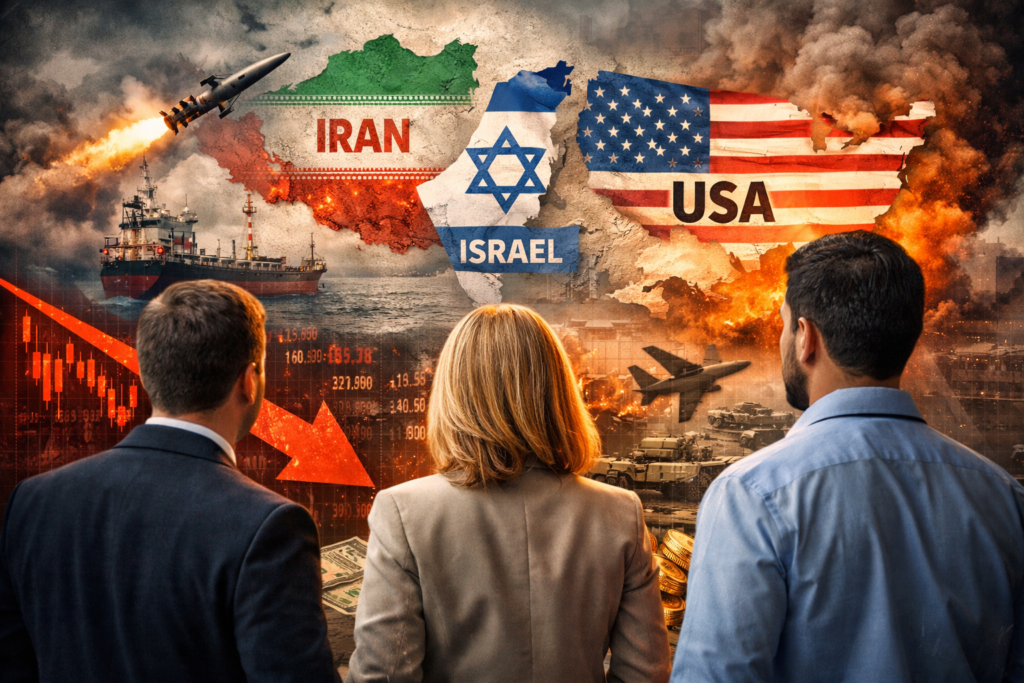
Things are getting pretty tense in the Middle East right now, with all this back and forth between Iran, Israel, and the US. It seems like its pulling the whole global financial setup into some kind of shakeup.
Market volatility over there keeps pushing oil prices all over the place, you know. And gold, people are rushing to it more. I think investment plans worldwide are having to shift too, sort of reacting to that mess. Its not totally clear how far this will go.
Volatility like this hits different spots, oil being the big one that stands out. Global strategies feel off balance because of it.
Things are getting really shaky in the global financial system right now. Its mostly because of these growing tensions between Iran, Israel, and the United States. I think that kind of geopolitical stuff always stirs up trouble.
These issues arent just staying in one area, though. Theyre spilling over into markets everywhere, affecting energy prices and how trade happens, plus what people expect for inflation and overall investor feelings. It seems like investor sentiment is especially hit hard when things feel uncertain like this.
The Strait of Hormuz and Red Sea routes are super important for energy and trade moving around the world. If something disrupts those, it adds a lot of risk on the supply side for the whole economy. That part gets a bit messy to explain, but basically, it could push things off track globally. Trade flows might slow down or get more expensive, I guess.