

The United Arab Emirates’ Interventionist Foreign Policy:
Strategic Ambitions, Regional Backlash, and Structural Failures in Yemen and Somalia
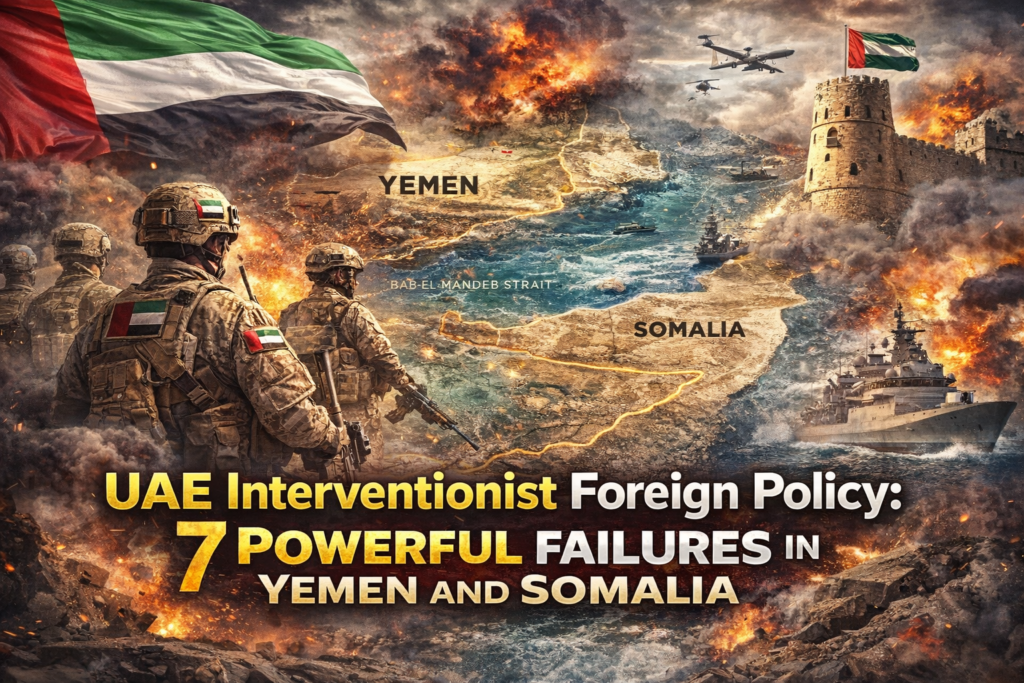
UAE interventionist foreign policy has reshaped political and security dynamics across the Middle East and the Horn of Africa, particularly in Yemen and Somalia, where strategic ambitions have faced growing resistance and setbacks.
Abstract
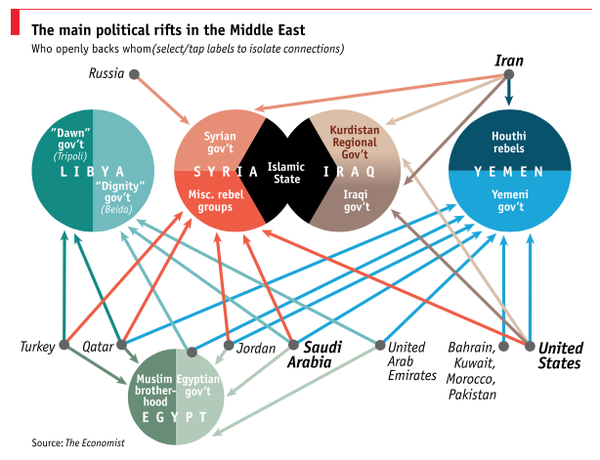
Over the last decade, the United Arab Emirates (UAE) has emerged as one of the most assertive middle powers in the Middle East and the Horn of Africa. Leveraging economic resources, military capabilities, and strategic alliances, Abu Dhabi pursued an interventionist foreign policy aimed at shaping political outcomes beyond its borders. This paper provides an in-depth policy analysis of the UAE’s interventions in Yemen and Somalia, examining the motivations behind its actions, the mechanisms of influence employed, and the political, military, and reputational setbacks that followed. The study argues that the UAE’s reliance on proxy forces, parallel governance structures, and coercive leverage has generated significant resistance from host states, ultimately undermining its long-term strategic objectives.
The evolution of UAE interventionist foreign policy reflects a broader shift toward assertive regional power projection.
1. Introduction: The Rise of an Interventionist Middle Power
In contemporary international relations, middle powers increasingly seek to expand their influence through selective intervention rather than traditional diplomacy alone. The United Arab Emirates represents a striking example of this trend. Despite its relatively small population, the UAE has developed advanced military capabilities, extensive financial networks, and strategic partnerships that allow it to project power well beyond the Gulf region.
Since the early 2010s, Abu Dhabi’s foreign policy has been shaped by three core objectives: regime security, control over strategic maritime corridors, and containment of political movements perceived as threatening, particularly political Islam. These priorities translated into direct and indirect interventions in fragile states, most notably Yemen and Somalia. While initially framed as stabilisation efforts, these interventions increasingly revealed coercive and unilateral characteristics.
2. Strategic Foundations of UAE Foreign Policy
2.1 Security Doctrine and Threat Perception
The UAE’s interventionist posture is rooted in a security doctrine that views instability in neighbouring regions as an existential threat. The leadership in Abu Dhabi perceives state collapse, armed non-state actors, and transnational ideological movements as risks that could spill over into the Gulf. Consequently, the UAE has prioritised pre-emptive engagement beyond its borders.
2.2 Maritime Power and Trade Route Control
A second pillar of UAE strategy is maritime dominance. Control over ports, shipping lanes, and chokepoints—particularly the Bab el-Mandeb Strait and the western Indian Ocean—has been central to Abu Dhabi’s regional ambitions. Investments in ports and logistics were frequently accompanied by security arrangements, blurring the line between commercial and military objectives.
2.3 Proxy Warfare as a Policy Tool
Rather than large-scale troop deployments, the UAE favoured proxy warfare. By training, financing, and equipping local militias, Abu Dhabi aimed to exert influence while minimising domestic political costs. However, this approach carried significant long-term risks, particularly when proxy agendas diverged from host-state priorities.
Analysts argue that UAE interventionist foreign policy relies heavily on proxy forces, creating long-term instability rather than sustainable influence.
In both Yemen and Somalia, UAE interventionist foreign policy has relied heavily on proxy actors and parallel security structures.
3. Yemen: Intervention, Fragmentation, and Strategic Reversal
UAE Interventionist Foreign Policy in Yemen
3.1 Entry into the Yemen Conflict
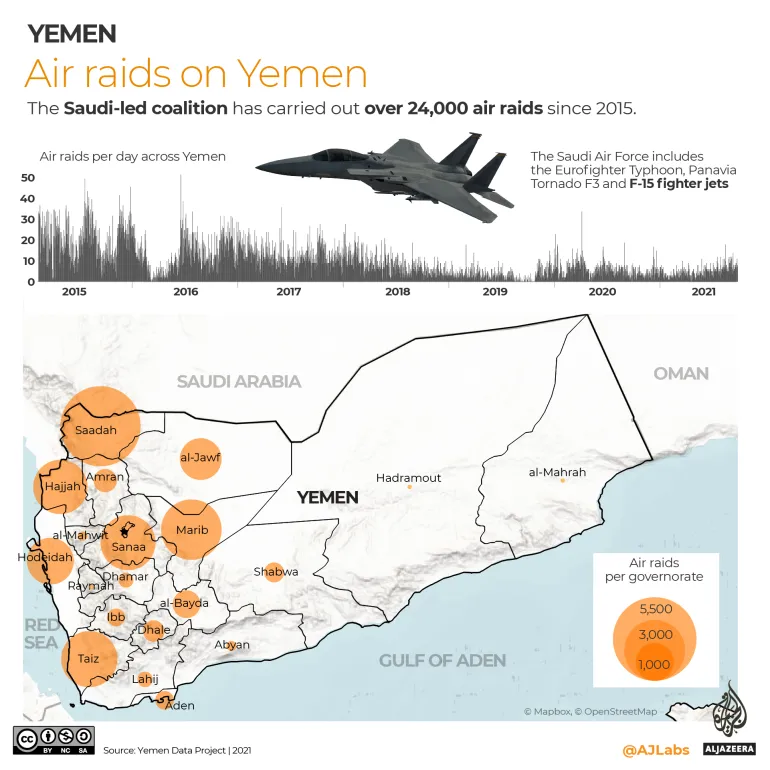
The UAE entered the Yemen conflict in 2015 as part of the Saudi-led coalition, officially seeking to restore Yemen’s internationally recognised government. Initially, Emirati forces played a decisive role in counter-terrorism operations and coastal security, gaining international credibility.
3.2 Support for Southern Separatist Forces
Over time, the UAE shifted its focus toward supporting southern separatist actors, particularly those advocating autonomy or independence from the Yemeni state. These groups received financial backing, weapons, and political support, enabling them to challenge the authority of the central government.
3.3 Accusations of Undermining Sovereignty
Yemeni authorities later accused UAE-backed leaders of political treason, arguing that their actions weakened national unity and prolonged the conflict. The emergence of parallel power structures undermined state legitimacy and intensified internal divisions.
3.4 Coalition Fractures and Saudi Counter-Moves
Tensions between Saudi Arabia and the UAE became increasingly visible as Riyadh prioritised territorial unity while Abu Dhabi supported decentralisation through proxies. Saudi airstrikes against separatist positions forced UAE-aligned forces to withdraw from key cities, marking a strategic setback for Abu Dhabi.
4. Yemen as a Theatre of Regional Power Competition
4.1 Red Sea and Bab el-Mandeb Geopolitics
Yemen’s geographic position makes it critical to Red Sea security. Control over coastal areas allows influence over global trade routes linking Europe and Asia. The UAE’s presence was widely interpreted as an attempt to shape maritime security architecture.
4.2 Allegations of Broader Strategic Alignment
Regional analysts increasingly linked the UAE’s Yemen strategy to broader geopolitical alignments, including indirect coordination with Israel on Red Sea security. While often contested, such perceptions further eroded local trust.
4.3 Humanitarian and Political Costs
The fragmentation of authority exacerbated Yemen’s humanitarian crisis. From a policy perspective, the UAE’s approach generated diminishing returns as political costs outweighed tactical gains.
Critics argue that UAE interventionist foreign policy prioritised short-term control over long-term political legitimacy.

5. Somalia: From Strategic Partnership to Diplomatic Breakdown
UAE Interventionist Foreign Policy and the Somalia Crisis
5.1 Early Engagement and Security Cooperation
In Somalia, the UAE initially positioned itself as a partner in state-building, providing security training and development assistance. These efforts coincided with broader Gulf engagement in the Horn of Africa.
5.2 Port Agreements and Federal Bypass
Over time, Abu Dhabi pursued direct agreements with regional administrations, particularly concerning port management. The Federal Government of Somalia viewed these arrangements as violations of national sovereignty and constitutional order.
5.3 Cancellation of Agreements
In a decisive move, Somalia cancelled all agreements with the UAE, including those related to major ports. This action signalled a rejection of external interference and a reassertion of federal authority.
5.4 Withdrawal from Bosaso
Following diplomatic fallout, the UAE removed its military presence from Bosaso. The withdrawal marked a significant contraction of Emirati influence in the Horn of Africa.
6. Structural Weaknesses of the UAE Intervention Model
6.1 Legitimacy Deficit
A central weakness of UAE interventions was the lack of domestic legitimacy in host states. Engagements were often perceived as elite-driven and externally imposed.
6.2 Overreliance on Coercion
The use of proxies and security leverage created short-term compliance but long-term resistance. This dynamic ultimately undermined strategic sustainability.
6.3 Reputational Costs
Internationally, the UAE’s actions increasingly attracted criticism, complicating its efforts to position itself as a stabilising regional actor.
Critics argue that UAE interventionist foreign policy prioritised short-term control over long-term political legitimacy.
7. Regional and Global Implications
7.1 Shifting Norms on Sovereignty
The backlash against UAE interventions reflects a broader trend in which fragile states assert sovereignty against external actors, even powerful ones.
7.2 Lessons for Middle Powers
The UAE case illustrates the limits of middle-power interventionism in complex conflict environments. Economic power alone does not guarantee political influence.
8. Policy Lessons and Strategic Alternatives
8.1 Multilateral Engagement
Future influence may require multilateral frameworks rather than unilateral action.
8.2 Legal and Institutional Transparency
Respect for host-state legal frameworks is critical for sustainable partnerships.
8.3 From Coercion to Cooperation
Long-term stability is more likely through inclusive political processes than through proxy control.
9. Conclusion
The setbacks experienced by the UAE in Yemen and Somalia underscore the structural limits of interventionist foreign policy. While Abu Dhabi achieved tactical successes, its reliance on proxy forces and parallel governance structures ultimately provoked resistance and strategic reversal. As sovereignty concerns and local agency gain prominence, coercive influence is becoming increasingly costly. For the UAE, a recalibration toward diplomacy, multilateralism, and respect for national political processes may offer a more sustainable path to regional influence.
Ultimately, the limitations of UAE interventionist foreign policy demonstrate the high costs of coercive regional engagement.
Ultimately, the failures of UAE interventionist foreign policy highlight the limits of coercive influence in fragile states.
Middle East geopolitics article
