
Artificial Intelligence in Software Development, Website Creation, and Professional Content Writing: Capabilities, Practical Utilization, and Strategic Benefits
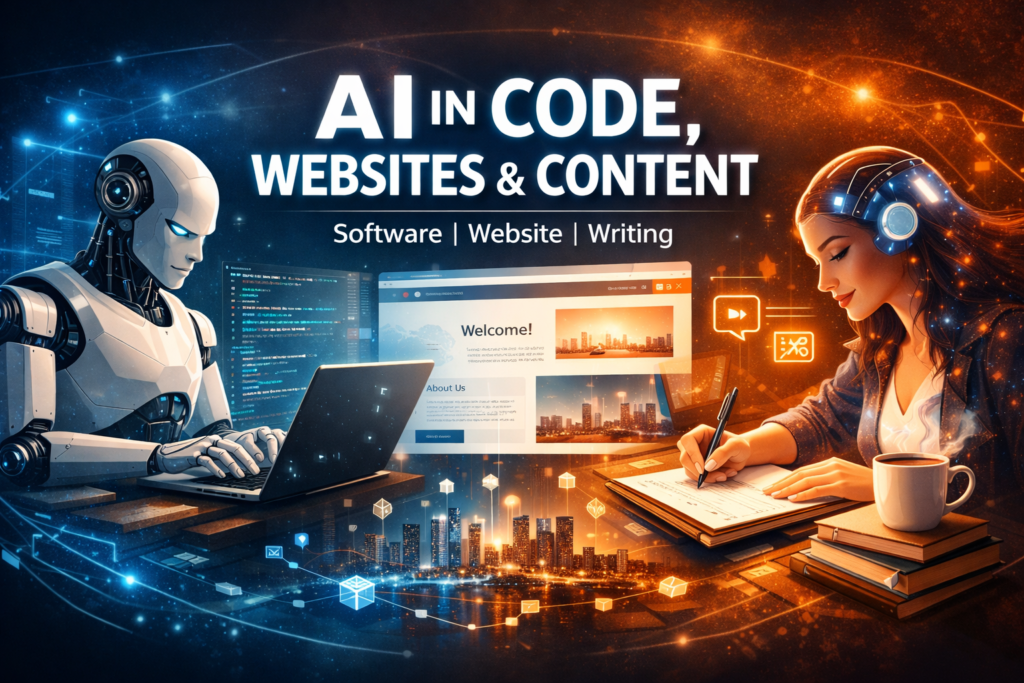
Artificial Intelligence in coding and website development is transforming how software, websites, and digital content are created in modern industries.
Introduction
Artificial Intelligence has rapidly evolved from a theoretical concept into a practical and indispensable tool across nearly all professional fields. Among the most transformative areas impacted by AI are software development, website creation, and professional content writing. These domains, once dependent entirely on human expertise and long development cycles, are now being reshaped by intelligent systems capable of generating high-quality output in a fraction of the time previously required. AI systems can now write complete software programs, design and deploy fully functional websites, and produce long-form professional articles that meet academic, commercial, and editorial standards.
This transformation is not merely technological; it is structural. AI has altered workflows, reduced costs, expanded access to technical skills, and created new opportunities for individuals and organizations with limited resources. Understanding how these AI systems function, how they can be effectively utilized, and how they can complement human expertise is essential for professionals seeking to remain competitive in a rapidly changing digital environment.
This article provides a comprehensive examination of how artificial intelligence can be leveraged to write complete codebases, build full-featured websites, and produce professional-grade articles. It further explores practical methods for maximizing the value of these tools in real-world applications, including education, entrepreneurship, digital marketing, and organizational development.
Artificial Intelligence as a Software Development Tool
How Artificial Intelligence in Coding Improves Software Development
The use of artificial intelligence in software development represents one of the most significant paradigms shifts in modern computing. AI-powered coding systems are designed to understand natural language instructions, interpret programming requirements, and generate syntactically correct and logically coherent code. These systems are trained on vast repositories of open-source software, technical documentation, and programming patterns, enabling them to replicate best practices across multiple programming languages and frameworks.
Artificial Intelligence in Website Development and Design Automation
Artificial Intelligence in Coding and Website Development is rapidly improving software automation and modern web design across global industries.
From a practical standpoint, AI can be used to accelerate the development lifecycle at every stage. During the planning phase, AI can translate functional requirements into technical specifications, helping developers clarify system architecture before writing a single line of code. During implementation, AI can generate entire modules, APIs, or user interfaces based on descriptive prompts. This significantly reduces the time required to move from concept to working prototype.
Benefits of Artificial Intelligence in Content Creation
For junior developers and students, AI serves as an interactive tutor. It can explain complex algorithms, demonstrate alternative implementations, and identify errors in existing code. Rather than replacing learning, AI enhances it by providing immediate feedback and contextual explanations. This lowers the barrier to entry for programming and allows individuals without formal computer science backgrounds to develop functional applications.
In professional environments, AI-driven coding tools are particularly valuable for repetitive or standardized tasks. Writing boilerplate code, configuring databases, setting up authentication systems, and integrating third-party APIs are all areas where AI can produce reliable results quickly. This allows experienced developers to focus on higher-level problem-solving, system optimization, and innovation.
However, effective utilization of AI in coding requires human oversight. While AI can generate correct code, it does not inherently understand business context, long-term maintainability, or ethical considerations. Professionals who achieve the greatest benefit from AI are those who treat it as a collaborative assistant rather than an autonomous developer.
AI-Driven Website Design and Development
Website creation has traditionally required a combination of skills, including visual design, frontend development, backend programming, and content strategy. Artificial intelligence has dramatically simplified this process by integrating these components into unified systems capable of producing complete websites from minimal input.
AI-powered website builders operate by analyzing user preferences, industry standards, and usability principles. When a user provides basic information such as the purpose of the website, target audience, and desired style, the AI generates a structured layout, selects appropriate color schemes, creates responsive design elements, and populates pages with relevant placeholder content. The result is a functional and visually coherent website that can be customized further as needed.
Companies adopting Artificial Intelligence in Coding and Website Development benefit from reduced costs, faster deployment, and improved accuracy in software engineering and modern web technologies.
For small business owners and entrepreneurs, this capability is transformative. Individuals without technical backgrounds can launch professional websites for e-commerce, service promotion, or personal branding without hiring developers or designers. This democratization of web development reduces startup costs and accelerates time to market, which is particularly valuable in competitive industries.
AI also enhances website optimization. Intelligent systems can analyze user behavior, loading speeds, accessibility standards, and search engine performance to suggest or automatically implement improvements. This includes optimizing images, refining navigation structures, and enhancing mobile responsiveness. Over time, AI-driven websites can adapt dynamically based on user engagement data, improving conversion rates and user satisfaction.
From an organizational perspective, AI-generated websites can support scalability. As businesses grow, AI can assist in adding new pages, integrating additional services, or localizing content for different regions. This flexibility allows organizations to maintain a consistent digital presence while adapting to evolving needs.
Despite these advantages, strategic input remains essential. AI can implement design patterns effectively, but defining brand identity, messaging tone, and long-term digital strategy requires human judgment. Successful website projects therefore combine AI efficiency with human creativity and oversight.
Artificial Intelligence in Coding and Website Development is becoming a core driver of digital transformation, enabling developers and businesses to automate software creation, streamline website design, and improve development efficiency across multiple industries.

https://www.ibm.com/topics/artificial-intelligence
Artificial Intelligence in Professional Article and Content Writing
Businesses are increasingly investing in Artificial Intelligence in Coding and Website Development to improve efficiency and reduce operational costs.
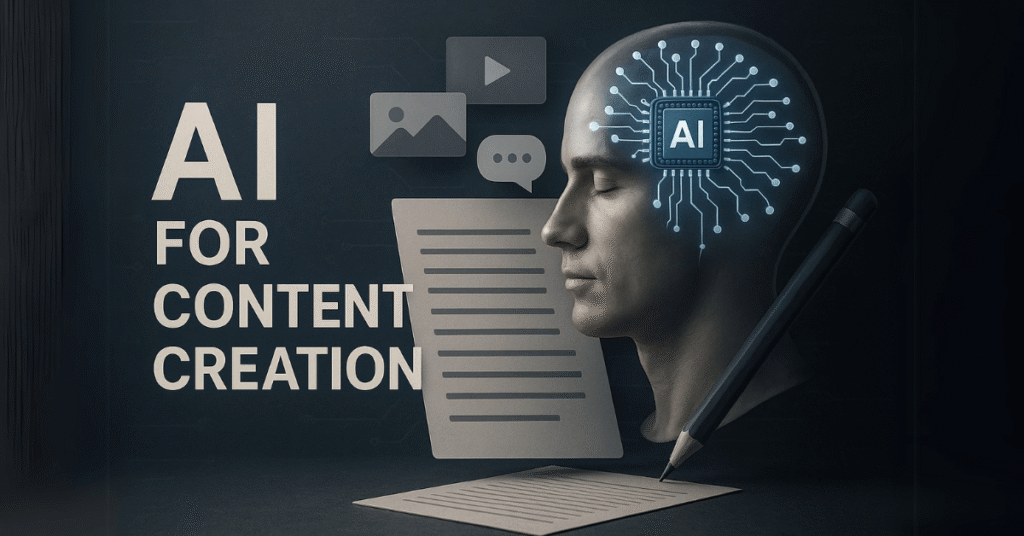
One of the most widely adopted applications of artificial intelligence is professional content creation. AI writing systems are capable of producing long-form articles, research summaries, marketing copy, technical documentation, and educational materials with remarkable fluency and coherence. These systems leverage natural language processing models trained on diverse textual sources, enabling them to emulate professional writing styles across multiple disciplines..
In practical use, AI can significantly reduce the time required to produce high-quality written content. For businesses, this means faster content marketing cycles, consistent branding across platforms, and the ability to scale output without proportionally increasing staff. AI can generate blog posts, newsletters, website copy, and product descriptions that align with specific keywords and audience profiles.
In academic and professional settings, AI assists in drafting reports, proposals, and policy documents. It can organize complex information into logical structures, ensure grammatical accuracy, and maintain formal tone. Researchers and professionals can use AI-generated drafts as foundational documents, refining them with domain-specific insights and original analysis.
For educators and learners, AI writing tools support knowledge dissemination and comprehension. They can simplify complex topics, generate study materials, and adapt explanations to different proficiency levels. This enhances accessibility and supports inclusive education initiatives.
Ethical and quality considerations are particularly important in AI-generated writing. While AI can produce coherent text, it does not possess genuine understanding or originality. Therefore, responsible use involves verification of factual accuracy, citation of sources where necessary, and clear differentiation between AI-assisted and human-authored content. When used transparently and responsibly, AI writing tools enhance productivity without compromising integrity.
Integrating AI Tools for Maximum Professional Benefit
Businesses are increasingly investing in Artificial Intelligence in Coding and Website Development to improve efficiency and reduce operational costs.
The true power of artificial intelligence emerges when its capabilities are integrated across multiple domains. A single project may involve AI-assisted coding, AI-driven website development, and AI-generated content working together as a unified system. For example, an entrepreneur launching an online platform can use AI to design the website, develop backend functionality, and populate the site with professional articles and marketing materials within a short timeframe.
This integrated approach is particularly valuable in resource-constrained environments. Non-governmental organizations, educational institutions, and startups can leverage AI to build digital infrastructure that would otherwise require significant financial investment. By automating foundational tasks, AI enables these organizations to allocate resources toward mission-critical activities such as service delivery and community engagement.
Professionals who seek to maximize AI benefits should focus on developing complementary skills. Understanding how to write effective prompts, evaluate AI output, and refine generated materials is essential. This skill set, often referred to as AI literacy, is becoming increasingly important across industries.
Moreover, organizations should establish guidelines for AI usage to ensure consistency, quality, and ethical compliance. This includes defining which tasks are appropriate for automation, implementing review processes, and maintaining transparency with stakeholders.
The future of Artificial Intelligence in Coding and Website Development will continue to shape how applications, platforms, and digital content are built, maintained, and scaled globally.

Read our guide about digital marketing strategies
Limitations and Responsible Use of Artificial Intelligence
The future of Artificial Intelligence in Coding and Website Development promises faster innovation, improved digital services, and smarter automation tools.
Despite its impressive capabilities, artificial intelligence has inherent limitations. AI systems rely on existing data and patterns, which means they may reproduce biases present in training data or generate outputs that lack contextual nuance. They do not possess consciousness, moral reasoning, or genuine creativity in the human sense.
Responsible use of AI requires awareness of these limitations. Professionals must verify outputs, particularly in critical areas such as healthcare, law, and public policy. AI should support decision-making rather than replace it, ensuring that accountability remains with human users.
Additionally, there are concerns regarding workforce displacement and data privacy. While AI increases efficiency, it also necessitates reskilling and adaptation. Organizations and governments must invest in education and policy frameworks that support equitable integration of AI technologies.
Read our guide about digital marketing strategies
Conclusion
Artificial intelligence has fundamentally reshaped the landscape of software development, website creation, and professional content writing. Its ability to generate complete codebases, design functional websites, and produce high-quality articles has expanded access to technical capabilities and accelerated innovation across sectors.
When used strategically and responsibly, AI serves as a powerful collaborator that enhances human productivity rather than replacing human expertise. Professionals who embrace AI as a tool for augmentation, while maintaining critical oversight and ethical standards, are best positioned to thrive in the evolving digital economy.
As AI technology continues to advance, its role in professional workflows will become increasingly integrated and sophisticated. Understanding how to leverage these systems effectively is no longer optional; it is a core competency for individuals and organizations seeking sustainable success in the modern world.
The future of Artificial Intelligence in Coding and Website Development will continue to shape how applications, platforms, and digital content are built, maintained, and scaled globally.
Read our guide about digital marketing strategies