

Introduction
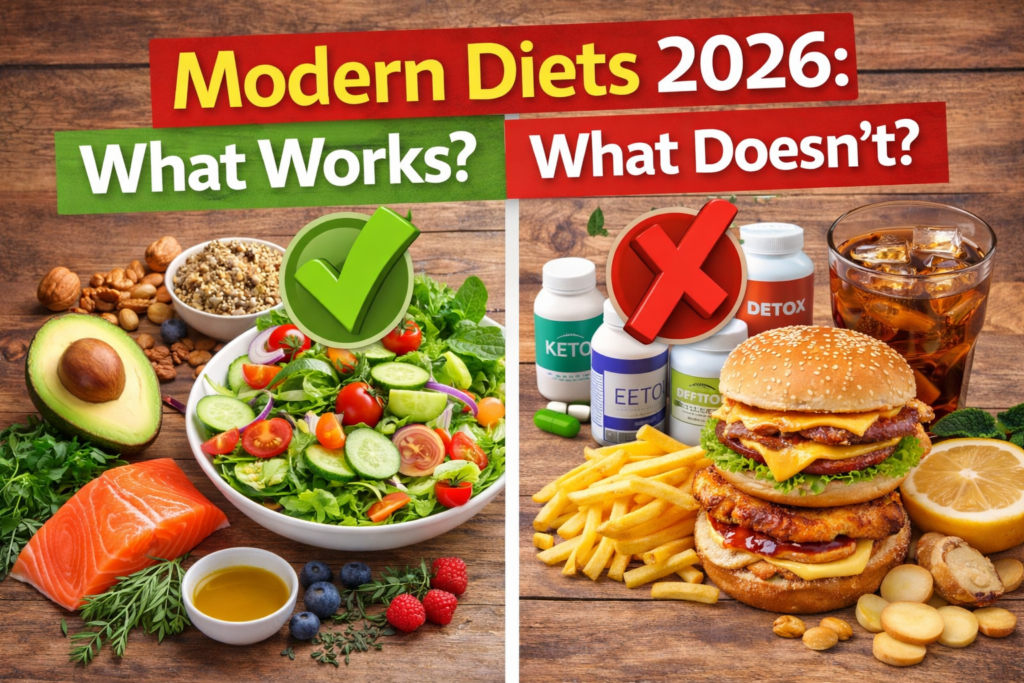
Modern diets are everywhere in 2026. From social media trends to celebrity endorsements, new eating plans promise rapid weight loss, better health, and effortless results. But with so many options, a critical question remains: which modern diets truly work, and which are just clever marketing?
This guide cuts through the noise with a balanced, evidence-based look at today’s most popular diets—helping you choose what’s effective, safe, and sustainable.
Modern diets 2026 continue to shape how people approach nutrition, weight loss, and long-term health in today’s fast-paced world.
Modern diets 2026 have taken over social media, wellness blogs, and fitness platforms across the USA, Europe, and global markets. From celebrity-backed eating plans to influencer-promoted programs, many diets promise fast results—but not all of them deliver real, lasting benefits.
This article breaks down which modern diets actually work, which ones are mostly marketing hype, and how to choose a diet that supports long-term health and weight management.
WWhat Defines a “Modern Diet” in 2026?
In 2026, a “modern diet” is no longer defined solely by what people eat—it is defined by how the diet fits into modern life. Today’s eating plans are shaped by technology, marketing, convenience, and lifestyle expectations as much as by nutrition itself.
Modern diets are designed to appeal to busy, digitally connected consumers who want results without complexity. While some of these diets are grounded in real nutritional science, others rely heavily on presentation and hype. Understanding the defining features helps separate what works from what merely sounds appealing.
Convenience and Speed
One of the strongest defining traits of modern diets in 2026 is convenience. Many people no longer have the time—or patience—for complex meal preparation. As a result, modern diets often promise fast, easy solutions.
Examples include:
- Ready-to-drink meal replacements
- Pre-packaged “healthy” meals delivered weekly
- Diets built around minimal cooking or repetitive food choices
For busy professionals in the USA or urban centers across Europe, convenience-driven diets feel realistic and appealing. However, convenience alone does not guarantee nutritional quality. Some quick solutions prioritize speed over balanced nutrients, which can limit long-term success.
Strong Branding and Influencer Promotion
Modern diets are often marketed like lifestyle brands rather than nutrition plans. In 2026, social media plays a major role in shaping diet trends, with influencers promoting eating styles through curated content, testimonials, and transformations.
Strong branding may include:
- Catchy diet names
- Professional websites and apps
- Before-and-after images
- Celebrity or influencer endorsements
While branding can help people discover useful dietary approaches, it can also create unrealistic expectations. A diet that looks impressive online may not always deliver meaningful health benefits in real life.
Claims of Metabolic “Hacks” or Shortcuts
Many modern diets in 2026 promise to “hack” the body’s metabolism. These claims suggest that specific foods, supplements, or timing strategies can dramatically accelerate fat loss with minimal effort.
Common examples include:
- Eating windows that claim to “reset” metabolism
- Drinks or supplements advertised as fat-burning boosters
- Diets that claim to bypass calorie balance entirely
Although metabolism plays an important role in weight management, there are no true shortcuts. Sustainable results still depend on calorie balance, food quality, and consistency. Diets that oversell metabolic hacks often underdeliver in the long term.
Lifestyle Integration (Apps, Supplements, Communities)
What truly sets modern diets apart in 2026 is integration into daily life. Many diets now function as complete ecosystems rather than simple eating guidelines.
This integration may include:
- Mobile apps for tracking meals and progress
- Subscription-based supplement plans
- Online communities for motivation and accountability
- Personalized recommendations using data and algorithms
When used correctly, lifestyle integration can improve adherence and motivation. However, it can also increase dependency on paid products or platforms, shifting focus away from foundational nutrition habits.
The Reality Behind Modern Diets
Some modern diets genuinely improve health outcomes by encouraging better food choices, structure, and consistency. Others rely primarily on urgency, exclusivity, and emotional appeal.
The key difference lies in whether the diet:
- Encourages balanced, whole-food nutrition
- Can be maintained long-term
- Adapts to individual lifestyles without extremes
In 2026, the most effective modern diets are those that blend science, simplicity, and sustainability—not just marketing.
How to Choose the Right Modern Diet in 2026
- Is it based on whole foods?
- Can you follow it long-term?
- Does it avoid extreme restrictions?
- Is it supported by nutritional science?
The Role of Technology in Modern Diets 2026
Apps, meal planners, and smart nutrition tracking tools can support consistency, but they do not replace healthy eating habits.
Why Sustainability Matters More Than Trends
The most effective modern diets in 2026 focus on habits that can be maintained for years—not quick fixes designed for short-term results.
For a more active approach, read our guide on quick home workouts for weight loss.
Diets That Actually Work in 2026 (Evidence-Based)
Not all diets are created equal. In 2026, the diets that consistently deliver results share one thing in common: they are supported by science, not trends. Below are the eating patterns proven to work in real life.
1. Mediterranean-Style Diet
Why it works:
The Mediterranean diet is one of the most extensively researched dietary patterns in the world. Instead of strict rules, it emphasizes nutrient-dense whole foods such as vegetables, fruits, legumes, whole grains, olive oil, nuts, fish, and moderate amounts of lean protein.
Scientific studies consistently show that this diet improves cardiovascular health, reduces inflammation, supports gut health, and helps regulate blood sugar levels. These factors directly influence long-term weight control and metabolic health.
Best for:
- Heart health
- Long-term weight management
- Overall wellness and disease prevention
Reality check:
The Mediterranean diet does not promise rapid weight loss. Results are gradual, but they are sustainable and long-lasting, making this diet ideal for people who value health over quick fixes.
2. High-Protein, Whole-Food Diets
Why they work:
High-protein diets built around whole foods help control hunger by increasing satiety hormones while reducing cravings. Protein also plays a critical role in preserving lean muscle mass, especially during calorie reduction.
In 2026, many successful weight-loss approaches combine adequate protein intake with vegetables, healthy fats, and complex carbohydrates. This balance stabilizes blood sugar and supports metabolic efficiency.
Best for:
- Fat loss
- Active lifestyles and fitness goals
- Improving metabolic health
Reality check:
High-protein diets are most effective when protein comes from unprocessed sources such as lean meats, eggs, fish, legumes, and dairy. Ultra-processed protein products can undermine results.
3. Flexible Calorie-Controlled Diets
Why they work:
Flexible calorie-controlled diets focus on energy balance rather than food elimination. Instead of banning entire food groups, they emphasize portion awareness, mindful eating, and consistency.
This approach allows people to enjoy a wide variety of foods while still maintaining a calorie deficit when weight loss is the goal. Because flexibility reduces feelings of deprivation, adherence is much higher compared to restrictive diets.
Best for:
- People who want flexibility
- Long-term adherence
- Lifestyle-based weight management
Reality check:
Success depends on consistency and basic tracking. Without mindful portion control, calorie intake can easily exceed requirements.
Diet Trends That Are Mostly Marketing Hype
While evidence-based diets focus on fundamentals, many popular diet trends rely heavily on branding, urgency, and unrealistic promises.
1. Detox & Cleanse Diets
Marketing claim:
“Flush toxins and reset your body in days.”
Reality:
The human body already has highly effective detox systems—the liver, kidneys, lungs, and digestive tract. Detox teas and juice cleanses often result in temporary water loss, not actual fat loss.
In many cases, these diets are extremely low in calories and nutrients, leading to fatigue, muscle loss, and rebound weight gain once normal eating resumes.
2. Single-Ingredient or Extreme Restriction Diets
Marketing claim:
“Eat one food type to burn fat fast.”
Reality:
Extreme restriction diets may cause rapid scale weight loss, but this usually comes from water loss and muscle depletion, not fat reduction. Over time, these diets increase the risk of nutrient deficiencies, hormonal imbalance, and metabolic slowdown.
Most people regain weight quickly due to unsustainable rules and increased cravings.
3. Supplement-Driven Diet Plans
Marketing claim:
“Drink this shake or take this pill to lose weight effortlessly.”
Reality:
While certain supplements can support nutrition, no supplement can replace balanced eating. Many supplement-based diets rely on aggressive marketing rather than clinical evidence.
In 2026, regulatory scrutiny has increased, yet misleading claims still exist. Sustainable weight loss always depends on diet quality, lifestyle habits, and consistency—not pills.
Key Takeaway: Evidence Beats Hype
The diets that actually work in 2026 are not the most dramatic or viral—they are the ones grounded in nutritional science, balance, and long-term adherence. Diets built on extreme restriction or aggressive marketing rarely deliver lasting results.
Choosing a diet should be about what you can maintain for years, not weeks.
Haddii aad rabto:
Modern Diets 2026 That Actually Work
Mediterranean-Style Diet
This diet emphasizes whole foods, healthy fats, vegetables, and lean proteins. It is widely supported by scientific research and linked to long-term health benefits.
High-Protein Whole-Food Diets
High-protein diets help preserve muscle mass and increase satiety, making them effective for sustainable fat loss when based on natural food sources.
Flexible Calorie-Controlled Diets
Instead of strict food bans, these diets allow flexibility while focusing on energy balance, making them easier to maintain long-term.
Why Some Diets Feel Effective—But Aren’t
Why Modern Diets 2026 Require a Smarter Approach
Many fad diets “work” initially because they:
- Drastically cut calories
- Eliminate processed foods temporarily
- Cause water weight loss
The problem is long-term sustainability. Once normal eating resumes, weight often returns.
How to Evaluate Any Diet in 2026
With hundreds of diets competing for attention in 2026, choosing the right one can feel overwhelming. Many plans are marketed as revolutionary, but only a few are truly effective and sustainable. Before committing to any diet, it’s essential to step back and evaluate it critically.
Asking the right questions can save you time, money, and frustration—and protect your long-term health.
Is It Based on Whole Foods?
A reliable diet in 2026 should be built primarily around whole, minimally processed foods. These include vegetables, fruits, whole grains, lean proteins, and healthy fats.
Whole foods provide:
- Essential nutrients the body needs to function
- Better digestion and gut health
- More stable energy levels
If a diet relies heavily on powders, pills, or ultra-processed products, it may be prioritizing convenience or profit over nutrition.
Can You Follow It for Years, Not Weeks?
One of the biggest mistakes people make is choosing a diet they cannot realistically maintain. Extreme rules, strict food bans, or highly restrictive eating windows often lead to burnout.
A practical diet should:
- Fit your lifestyle and cultural preferences
- Allow flexibility for social situations
- Feel manageable without constant stress
If you cannot imagine following a diet long-term, it is unlikely to deliver lasting results—regardless of how effective it looks on paper.
Does It Promote Balance Rather Than Extremes?
In 2026, the most effective diets are those that emphasize balance, not perfection. Extreme approaches—such as cutting out entire food groups or drastically lowering calories—often cause short-term success followed by long-term failure.
Balanced diets:
- Encourage moderation instead of restriction
- Support both physical and mental health
- Reduce the risk of binge eating or rebound weight gain
Any plan that promises results through extremes should be approached with caution.
Is It Supported by Real Nutritional Science?
Marketing claims can be persuasive, but they are not evidence. A trustworthy diet should be supported by credible research, not just testimonials or influencer endorsements.
Look for:
- References to peer-reviewed studies
- Recommendations aligned with established health organizations
- Clear explanations of how and why the diet works
If the diet’s success depends entirely on anecdotal stories, it is likely driven more by marketing than science.
The Final Test: Marketing or Meaningful?
If the answer to most of these questions is “no,” the diet is likely marketing-driven rather than health-focused. Effective diets do not rely on urgency, fear, or exaggerated promises—they rely on consistency, balance, and evidence.
In 2026, the smartest approach is not chasing trends, but choosing a diet that supports your health in the real world, every day.
The Role of Technology in Modern Diets
In 2026, technology supports—not replaces—healthy eating:
- Meal-planning apps
- Smart nutrition tracking
- Personalized recommendations
Tech can improve adherence, but the fundamentals remain the same.
Sustainable Weight Loss: What Actually Matters
No diet overrides these principles:
- Calorie balance over time
- Nutrient-dense foods
- Adequate protein and fiber
- Regular physical activity
- Consistency over perfection
Conclusion
Conclusion: Modern Diets 2026—Evidence Over Hype
Modern diets 2026 offer many choices, but only a few are built on real science. Diets that prioritize balance, whole foods, and flexibility consistently outperform those driven by marketing promises. Choosing evidence-based nutrition is the key to lasting results.
In 2026, the best diet isn’t the newest or loudest—it’s the one you can maintain while meeting your nutritional needs. Modern diets that emphasize balance, whole foods, and flexibility truly work. Diets built on extreme promises and aggressive marketing usually don’t.
Choose evidence over hype, and your results will last.
Ultimately, modern diets 2026 work best when they are based on balance, evidence, and sustainable habits rather than marketing promises.
According to Healthline , balanced diets based on whole foods are the most sustainable for long-term health.
Ultimately, modern diets 2026 work best when they are based on balance, evidence, and sustainable habits rather than marketing promises.